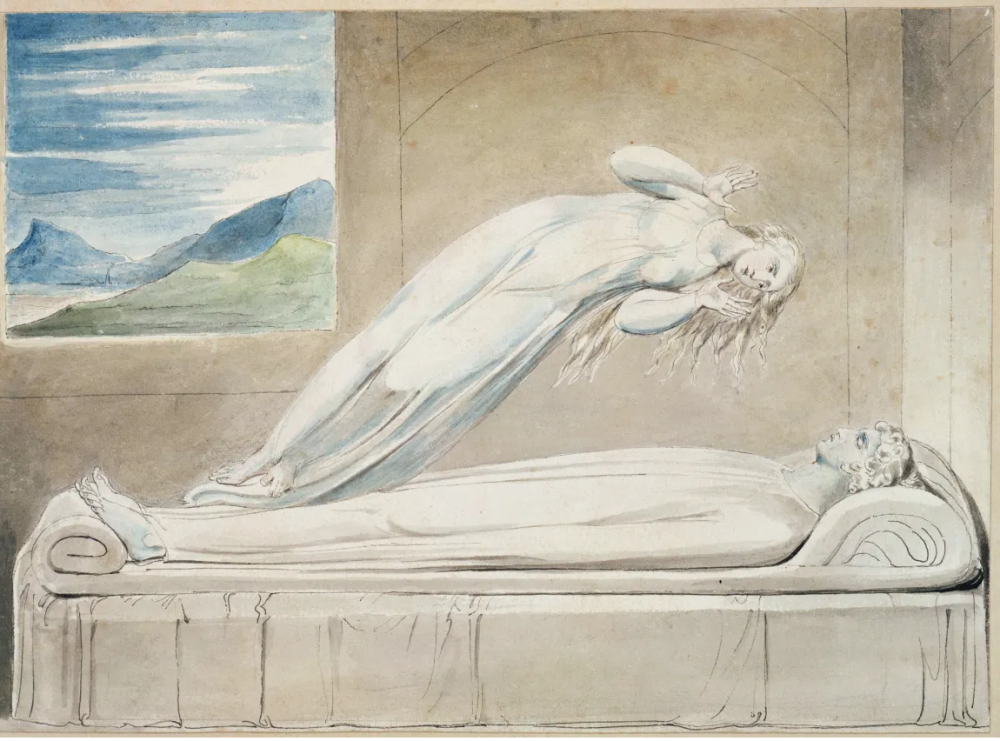

At the start of the 20th century, science was pushing into bold territory. New tools and ideas were changing how people understood life and death. In that climate, one doctor set out to answer a question that still lingers today. Can the human soul be measured?
Dr. Duncan MacDougall, a physician from Massachusetts, believed the soul had physical weight. He thought that if something leaves the body at death, it must have mass. This idea led him to design one of the strangest experiments in medical history. His goal was simple on paper, but unsettling in practice.
MacDougall built a special bed that sat on a large industrial scale. The device could detect tiny changes in weight, down to a few grams. He placed terminally ill patients on this bed and waited for their final moments. He believed that at the instant of death, the soul would leave the body, and the scale would reveal its weight.
For this, he selected six patients who were close to death, many suffering from tuberculosis. These patients were chosen because they were weak and unlikely to move much. That detail mattered, since even slight movement could affect the readings. The setup was tense, quiet, and deeply uncomfortable by today’s standards.
The Famous “21 Grams” Result

YT / The most talked about moment came during one of the first tests. A man lay on the scale as doctors watched closely. When he died, the scale suddenly dropped.
MacDougall recorded a weight loss of about three-quarters of an ounce, which equals roughly 21 grams.
MacDougall believed this drop could not be explained by normal body processes. He had already considered factors like sweat, breath, and waste. After ruling those out in his view, he claimed the missing weight must be the soul leaving the body. This single result became the foundation of the “21 grams” theory.
However, the story becomes less clear when you look at the other cases. Out of six patients, only one showed this exact result. The others produced messy and inconsistent data. In one case, the weight dropped and then rose again. In another, the equipment failed before death even occurred.
MacDougall still published his findings in medical and psychological research journals. He presented the 21 grams figure as a real discovery. The claim caught public attention fast. It offered a number, something concrete, for a question that had always been abstract.
Why Scientists Rejected the Experiment?

Olly / Pexels / The biggest issue was the tiny sample size. Six patients were not enough to support such a bold claim. Even worse, only one result matched his theory.
The experiment also lacked proper controls. The scale, though sensitive, was not perfect. Small shifts in air, temperature, or body fluids could affect readings. Death itself is a complex process, not a single moment. That makes it hard to pin down any exact change in weight.
Another problem was bias. MacDougall seemed eager to prove his idea, and that can shape how results are interpreted. He dismissed results that did not fit his theory. That approach goes against basic scientific principles.
However, he later conducted tests on dogs, which added more controversy. He poisoned several animals and measured their weight at death. The findings found no sudden weight loss and claimed this meant dogs have no souls. This conclusion ignored major biological differences and raised ethical concerns.
Other researchers tried similar experiments later on. They used better methods and more controlled settings. None found evidence of a measurable soul. Most explained any weight change as moisture loss or gas release. Over time, the scientific community labeled the 21 grams idea as pseudoscience.
Even with all its flaws, the story refuses to fade away. People are drawn to it because it offers a simple answer to a deep question. The idea that the soul has weight makes it feel real and measurable.