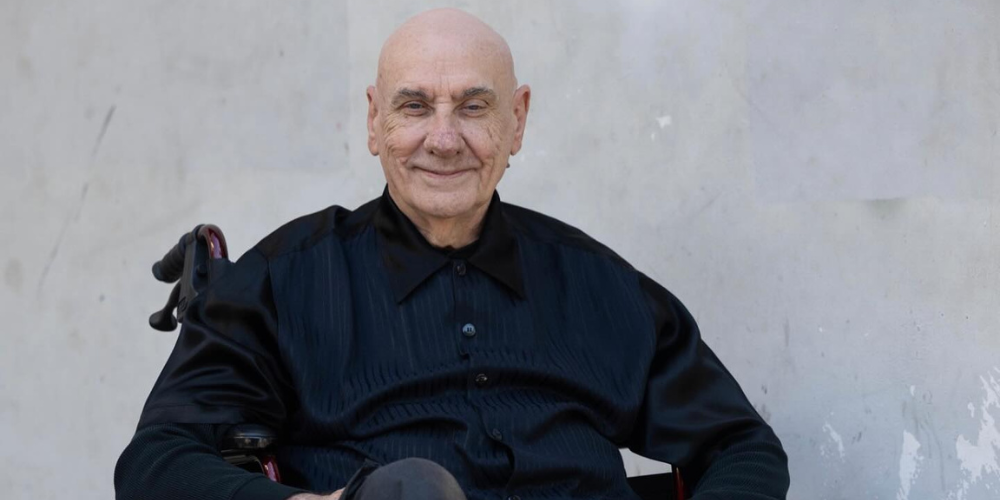

A quiet hospital chapel became the starting point of a life-altering shift for neurosurgeon Michael Egnor. At a moment marked by fear for his infant son’s development, a personal prayer was followed by what he described as a clear response—an experience that redirected both his faith and his scientific curiosity.
That single event later expanded into a larger question: does the human mind end with the brain, or does something beyond physical matter continue?
This question sits at the heart of Egnor’s 2025 book “The Immortal Mind,” published by Hachette Book Group. The work blends neuroscience with philosophical interpretation, arguing that brain science points toward a nonmaterial aspect of human consciousness often described as the soul.
A Turning Point Inside a Hospital Chapel
Egnor, a practicing neurosurgeon, recalls entering a hospital chapel while deeply worried about his months-old son, who was not making expected developmental responses such as eye contact or smiling. In that moment, he prayed openly, saying, “I am terrified that my son is autistic.”
The narrative continues with a personal spiritual claim: a perceived reply that felt like God’s voice. Following this, a shift in belief occurred, leading to his conversion to Catholicism. He later reflected, “I’m sorry, I won’t be autistic to You any longer.”
That experience marked the beginning of a long intellectual path that connected surgical practice with questions about consciousness, identity, and what defines the human mind.
The Core Argument in “The Immortal Mind”
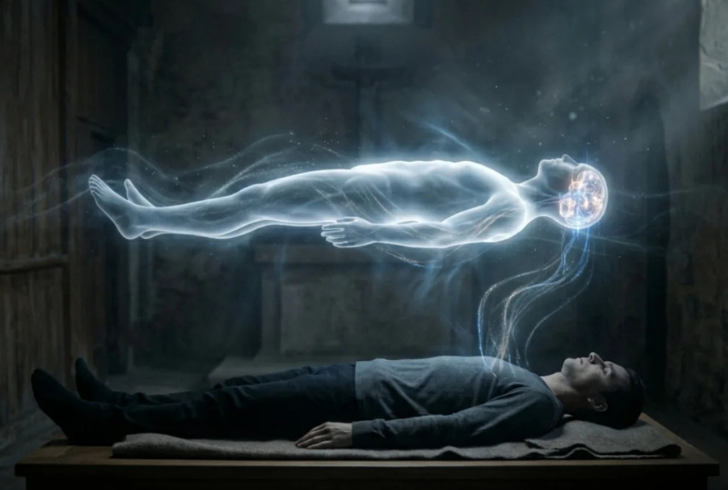
Instagram | deepinspace72 | Egnor rejects materialism, arguing that the mind and soul are distinct from physical brain mechanisms.
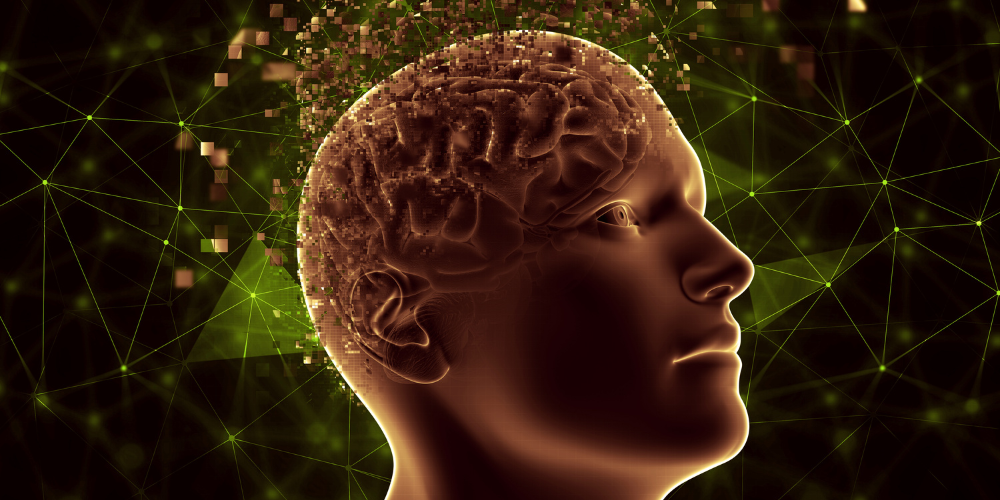
Egnor’s central position challenges mainstream neuroscience. He supports dualism—the idea that the mind is distinct from the physical brain. This stands in contrast to materialism, which views mental processes as fully produced by brain activity.
Throughout his book, Egnor suggests that certain neurological phenomena cannot be fully explained through physical mechanisms alone. He refers to this nonphysical aspect as the “immaterial mind,” often equated with the soul.
He has also publicly criticized materialism, stating in a C.S. Lewis Institute podcast, “Materialism and atheism … are toxic, soul-crushing ideologies. And they’re junk science, they’re bad science.”
His broader position extends into support for intelligent design, the idea that biological complexity reflects intentional creation rather than purely evolutionary processes.
Split-Brain Surgery and Conflicting Interpretations
A major focus in Egnor’s argument comes from split-brain research. This involves patients who have undergone corpus callosotomy, a surgical procedure that severs the corpus callosum, the structure connecting the brain’s two hemispheres. The procedure was historically used to reduce severe epileptic seizures.
Egnor reports that despite this disconnection, patients often continue to function with a unified sense of self. From his perspective, this suggests that consciousness is not divided by physical separation in the brain.
His interpretation leads to a broader claim: if the brain is split yet the mind remains unified, then consciousness may not be entirely dependent on brain structures.
However, other neuroscientists interpret the same evidence differently. Experiments show that each hemisphere processes information independently. For example, stimuli shown to the left visual field are processed in the right hemisphere, which lacks language ability. Patients may select a related object without being able to verbally explain the choice, instead creating a separate explanation based on the other hemisphere’s input.
Neuroscientist Bill Newsome of Stanford University explains the concern with Egnor’s interpretation clearly: “It’s damaging to go out there and say, ‘I’m a neurosurgeon, and this is the way science works,’ and cherry-pick these distorted examples that may give people the impression that something is true, that isn’t true.”
He also notes that communication between hemispheres still occurs through additional pathways such as the anterior commissure, reducing the idea of complete mental separation.
Wilder Penfield and Early Brain Mapping
Egnor also draws heavily from the work of neurosurgeon Wilder Penfield, who conducted brain stimulation experiments in the early 20th century. Penfield documented patient responses during surgery, including memories, sensations, and emotions triggered by electrical stimulation.
Penfield observed that stimulation rarely produced abstract thinking, such as mathematical reasoning or complex conceptual thought. Egnor interprets this gap as evidence that higher reasoning does not originate in the brain.
Neuroscientist Newsome challenges this conclusion, calling it overstated. Research over decades has identified distributed brain networks involved in memory, cognition, and numerical processing. Some studies link numerosity—the perception of quantity—to specific brain regions, while other forms of memory involve systems such as the hippocampus.
The absence of observed abstract thought during Penfield’s experiments, according to critics, does not confirm a nonmaterial mind. It may reflect limits of early experimental conditions and understanding.
Hydranencephaly and Consciousness Question
Another argument raised in “The Immortal Mind” involves hydranencephaly, a rare condition where large portions of the cerebral cortex are missing. Egnor suggests that such cases challenge current models of consciousness, which often associate awareness with cortical activity.
However, clinical research presents a more complex picture. Most documented cases involve severe impairment, with many infants surviving only a short time after birth. Neuroscientist Steven Novella of Yale School of Medicine emphasizes that brain plasticity plays a major role in how surviving neural tissue adapts, especially in early development.
He explains that claims of normal functioning without cortical structures are not supported by medical evidence. Instead, surviving regions may partially compensate, but full consciousness without a cortex is not observed.
Science, Method, and the Debate

Instagram | discoverycsc | Egnor argues that hydranencephaly proves awareness doesn't strictly depend on cortical activity.
The disagreement extends beyond specific case studies and into the philosophy of science itself. Materialist neuroscience assumes that all mental phenomena arise from physical processes in the brain. This framework allows experiments to remain testable and measurable.
Bill Newsome notes that introducing nonmaterial explanations into experimental science removes the ability to test hypotheses reliably. If something cannot be measured or observed, it falls outside scientific methodology.
Steven Novella is more direct in his critique, describing Egnor’s approach as reversing the scientific process: “It is the universal feature of pseudoscience—they’re starting with the conclusion, and they’re working backwards.”
He further argues that selectively choosing unusual cases while ignoring broader data creates a misleading picture of neuroscience.
From this perspective, intelligent design arguments are seen as reinterpreting scientific gaps rather than emerging from experimental findings.
The Larger Question of Faith and Science
Despite disagreement within neuroscience, there is shared recognition that science does not address every aspect of human experience. Questions about meaning, morality, and existence often fall outside experimental frameworks.
Newsome, who identifies as Christian while supporting evolution, highlights this boundary. He suggests that science and faith operate in different domains. Science explains physical processes, while faith can address questions of purpose and existence.
He cautions against using scientific uncertainty as evidence for supernatural conclusions, describing it as an easy but untested leap.
The debate surrounding “The Immortal Mind” reflects a deeper divide in how consciousness is understood. One side views the brain as the full source of thought, emotion, and identity, shaped entirely by physical processes. The other argues that neurological complexity hints at something beyond measurable matter.
Neurosurgery, split-brain research, and rare neurological conditions continue to fuel this discussion, yet interpretations remain sharply divided. While some see evidence of an immaterial mind, others point to gaps in knowledge, evolving research, and the importance of scientific rigor.
As neuroscience advances, the question remains open in philosophy but tightly bound within science: whether consciousness is purely physical or part of a broader reality still under exploration.