

Interest in body data has surged alongside a growing focus on weight loss trends and physique tracking. Alongside that shift, “AI body scans” have entered consumer spaces with bold claims about decoding body fat, muscle mass, visceral fat, and even biological age.
The pitch sounds precise and modern, yet the reality behind these tools is more layered. Some rely on clinical-grade imaging, others depend on electrical signals or simple phone cameras. The gap between measurement and interpretation often gets blurred in marketing.
Understanding what these scans actually measure, and what they miss, helps put their value in perspective.
What “AI Body Scans” Really Mean
The label “AI body scan” covers a wide range of technologies rather than one standardized tool. At the clinical end sits DEXA (Dual-Energy X-ray Absorptiometry), originally created to evaluate bone density. It now measures bone mass, fat distribution, lean tissue, and visceral fat with high precision.
DEXA systems separate body components using two low-dose X-ray beams, allowing a segmented view of body composition. A session typically costs between $40 and $300, depending on location and service provider. Companies like BodySpec report large-scale adoption and claim to operate one of the largest proprietary DEXA datasets, processing roughly 1,000 scans per day.
Below that level sits bioelectrical impedance analysis (BIA). This is the technology behind many smart scales and gym-based body scanners. A small electrical current passes through the body. Lean tissue conducts the signal more efficiently than fat, allowing the device to estimate composition based on resistance.
At the consumer edge, mobile apps attempt to estimate body fat using phone cameras. These tools rely on visual modeling from 2D images. Accuracy depends heavily on assumptions about body shape, lighting, posture, and angle, which introduces wide variation in results.
The Role of AI in These Systems

Freepik | AI body scans became popular because people now want detailed health data instead of relying only on traditional weight measurements.
The term “AI” is used differently depending on the product. In higher-grade systems, AI supports pattern analysis across large datasets. It helps track changes over time and compare results against population trends.
BodySpec describes its system as one that builds contextual health profiles over repeated scans. This approach connects past and present measurements to highlight trends rather than isolated snapshots.
In consumer tools, AI typically refers to prediction models trained on datasets that link physical inputs to estimated outcomes. The limitation appears when the input itself lacks precision. If the base measurement is inconsistent, the algorithm only refines an unstable starting point.
What These Scans Do Not Reveal
Body composition data provides a narrow window into physiology. It does not capture metabolic health in full.
A scan cannot measure insulin sensitivity, inflammation levels, thyroid function, cortisol balance, or hormonal fluctuations. These factors often determine overall health outcomes more directly than body fat percentage or lean mass.
Dr. Raymond Douglas, a board-certified oculoplastic surgeon at Cedars-Sinai Hospital, notes a key limitation:
“I had two people with similar scan results, but very different metabolic health once labs were checked. And if you're making lifestyle choices based on a scan number alone, you may be fixing the wrong problem."
This gap becomes even more visible when hydration or daily fluctuations enter the picture. Dr. Alexander Acosta highlights how easily readings can shift:
“I have years of experience with seeing patients who have high muscle readings but are simply water-retained. If you have retained more water, say from a salty lunch or your period, the machine is likely to report a 5% increase in muscle mass.”
BIA-based devices are especially sensitive to these variables. Water intake, exercise, sodium consumption, and hormonal cycles can all influence results within short time frames.
Biological Age and Its Limits

Magnific | AI body scans cannot fully measure important health factors like hormones, inflammation, or overall metabolic function.
One of the most marketed outputs is “biological age.” The concept suggests a body’s physiological condition can be condensed into a single number compared against population averages.
That number is often derived from algorithms built on statistical comparisons rather than direct biological markers. These averages may not reflect genetic diversity or individual metabolic differences.
Dr. Acosta points out a key flaw:
“From my experience, the algorithms don't take into account your genetic background and inherited metabolic rate. The computer may tell a 30-year-old they have a 50-year-old heart due to stress. I have actually seen these numbers change by five years after a bad night's sleep.”
Such variability raises concerns about treating biological age as a fixed health indicator.
Where AI Body Scans Hold Value
Despite limitations, body composition scans still serve a purpose when used correctly. Their value increases when the focus shifts from single readings to long-term trends.
When performed consistently under similar conditions, repeated scans can reveal meaningful trends such as changes in lean muscle mass, shifts in visceral fat distribution, gradual increases or decreases in body fat percentage, and bone density variations observed in clinical assessments.
Dr. Douglas explains this approach clearly:
“Muscle trending up, visceral fat trending down—those are worth paying attention to. The mistake most people make is treating a single session like a full medical workup."
DEXA scans are particularly useful for observing regional fat distribution and bone density. They can also reveal changes that do not appear on a standard scale, especially during weight loss interventions or medication use.
Elaine Shi, CEO and co-founder of BodySpec, emphasizes this broader view:
“A DEXA scan provides a much clearer picture of what is actually happening in your body by measuring body fat percentage by area, lean mass, bone density, and visceral fat. It moves us away from guessing based on proxies like BMI—which is outdated and doesn't represent diverse populations—and allows us to make decisions based on clinical-grade insights."
In contexts like GLP-1 medication use, body composition tracking may reveal lean mass loss alongside fat reduction, a detail a regular scale cannot show.
Using These Tools With Clear Expectations
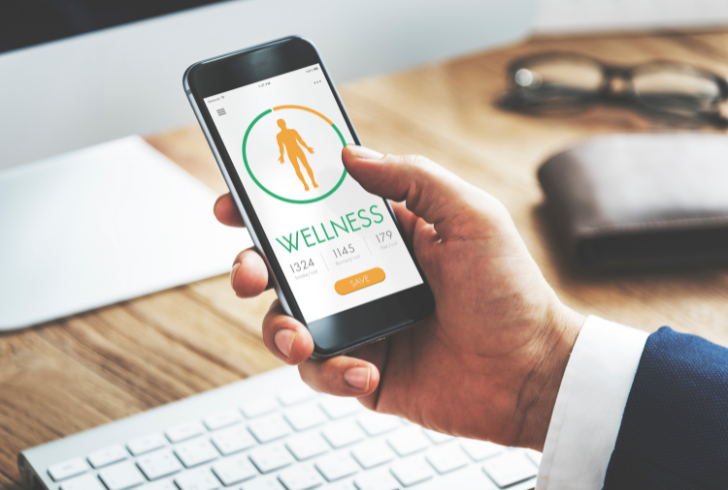
Freepik | rawpixel.com | Wellness brands use AI marketing to make body scanning tools feel more advanced, personal, and scientifically accurate.
Interpretation matters more than measurement alone. Body scans are most useful when paired with consistency and supporting health data.
Key considerations include:
- Scan under similar conditions each time (hydration, time of day, activity level)
- Avoid testing immediately after heavy exercise or high-sodium meals
- Treat BIA readings as estimates rather than precise values
- Combine results with blood work for deeper metabolic insight
Dr. Douglas advises a layered approach:
“Treat the scan as an awareness tool, then combine it with blood tests, blood markers of inflammation, and lifestyle habits to draw conclusions."
Phone-based estimation tools require even more caution. A 2D image does not reliably capture internal fat distribution or muscle density. Without a clear measurement source, predictions remain speculative.
The Reality Behind “AI-Powered” Health Tools
The wellness space often leans heavily on technical language. “AI-powered” has become a marketing phrase that suggests scientific accuracy even when underlying methods are limited.
Some systems do provide useful longitudinal tracking, especially clinical DEXA platforms. Others rely on indirect estimates that fluctuate based on external conditions.
The difference lies in measurement quality. A strong algorithm cannot correct weak input data. This distinction is often missing in consumer-facing messaging.
AI body scans sit between useful health tracking tools and overstated marketing claims. Clinical systems like DEXA provide reliable structural data on bone, fat, and lean tissue. BIA devices and phone-based apps offer broader estimates that shift with hydration, lifestyle, and environmental conditions.
Used over time, these scans can highlight trends that support health awareness. Used in isolation, they risk creating misleading conclusions about metabolic health or biological age.
A single number cannot reflect the complexity of human physiology. Body composition data works best as one part of a wider health picture, supported by clinical testing and consistent observation rather than short-term readings.