
Depression has long been viewed as a condition that begins and ends in the brain. New scientific findings, however, are expanding that perspective. Researchers are discovering that changes in the body's immune system may also reflect emotional health. Instead of treating the brain and body as separate systems, current evidence suggests they work in constant communication.
A recent study has added another piece to this growing body of research by linking the biological aging of immune cells with emotional symptoms of depression. While the findings do not prove cause and effect, they offer a fresh way to understand the relationship between mental health and physical biology.
How the Brain and Body Work Together
For centuries, science viewed the brain and the body as two separate systems. The brain was considered the center of thought, emotion, memory, and decision-making, while the body simply carried out its instructions and delivered sensory information.
This idea gained support in the 19th century after German physician Paul Ehrlich identified the blood-brain barrier, a protective layer that shields the brain from harmful substances circulating in the bloodstream.
Although this barrier blocks many dangerous compounds, it also contains specialized transport systems that allow essential nutrients such as glucose and amino acids to reach brain tissue. Because of this protective barrier, many medical experts believed that mental illnesses and physical diseases developed independently from one another.
Historical beliefs also shaped this view. Many early philosophers and scholars regarded the brain as the home of the soul or mind. As a result, psychological disorders were often separated from physical illnesses, even though both affect overall health.
Research Is Changing That View

Freepik | Mental health directly impacts physical health, raising the risk for diabetes, heart disease, and immune issues.
Scientific evidence now points to a much closer relationship between the brain and the body. Many physical illnesses can influence brain function, while mental health conditions can affect the body's major systems.
Inflammation caused by metabolic disorders, arthritis, cardiovascular disease, and cancer has been linked to changes in the nervous system. When inflammation reaches the brain, it can interfere with normal function and may contribute to anxiety, depression, and neurodegenerative conditions such as Alzheimer's disease and Parkinson's disease.
The relationship also works in the opposite direction. Mental health disorders have been associated with a higher risk of heart disease, diabetes, and problems involving the immune system. This two-way communication continues to reshape the understanding of both physical and mental health.
Liver disease offers another clear example of this connection. Whether inherited or acquired, liver dysfunction can raise ammonia levels in the blood. Once ammonia crosses the blood-brain barrier, it can damage brain tissue and affect neurological function.
The brain also regulates nearly every major system in the body to maintain internal balance, known as homeostasis. Through neuroendocrine pathways, it helps direct immune responses that protect against infections, cancer cells, and damaged tissue.
Emotional stress and anxiety have repeatedly been shown to weaken immune function and extend inflammatory responses, highlighting the close interaction between mental and physical health.
A Study Linking Depression and Immune Cell Aging
A recent study published in *The Journals of Gerontology* explored this relationship from a different angle. Instead of measuring inflammation, researchers focused on the biological age of monocytes, a type of white blood cell that plays an important role in immune defense.
The study included 440 women, and approximately 60% of the participants were living with HIV. Researchers measured the epigenetic age of monocytes, which estimates how biologically old cells appear compared with a person's actual age.
The results revealed an interesting pattern. Women whose immune cells showed signs of accelerated biological aging were more likely to experience emotional symptoms commonly linked to depression. These symptoms included losing interest in daily activities, reduced motivation, and feelings of hopelessness.
At the same time, the researchers found no meaningful connection between aged immune cells and physical symptoms of depression, such as fatigue or changes in appetite. The association appeared to be limited to emotional experiences rather than the physical effects of depression.
The researchers emphasized that these findings demonstrate a correlation rather than a direct cause. Even so, the selective relationship between immune cell aging and emotional symptoms presents an important scientific observation that deserves additional investigation.
What the Findings Could Mean
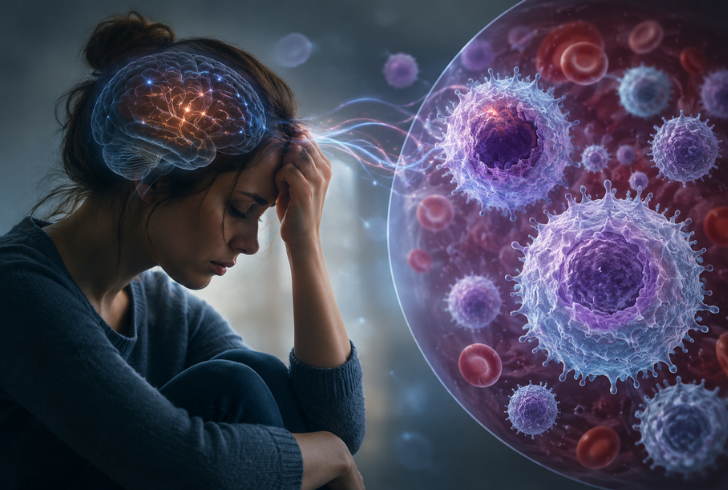
Freepik AI | Faster-aging immune cells are tied to depression's emotional symptoms, though the exact cause remains unproven.
The study does not introduce a new diagnostic test for depression. Instead, it raises the possibility that certain emotional symptoms may be reflected in measurable biological changes within the immune system.
Scientists have previously discussed whether blood-based markers could one day help identify mental health conditions. This research adds support to that idea by suggesting that measuring the biological age of immune cells through a blood test may eventually help identify individuals at greater risk of depression or contribute to more personalized treatment strategies.
More research will be needed before such applications become part of routine medical care.
Questions That Science Is Still Exploring
The latest findings have renewed the discussion about how the mind and body work together. Philosophers such as Descartes, Leibniz, Hume, and Locke spent years debating whether the mind exists separately from the body or develops through physical processes.
Modern science shows that mental health affects the body, and the body also influences emotional health. Even so, one important question remains. If biology creates every emotional experience, why do aging immune cells match feelings such as hopelessness or the loss of interest so closely?
Many researchers believe the brain controls both emotions and immune activity through shared biological pathways. This idea explains part of the connection, but it does not explain everything. Scientists still cannot fully explain how personal emotions develop from biological activity. Blood tests, cell counts, and biological age cannot measure human feelings on their own.
Recent research continues to reshape the understanding of depression. The study suggests that faster aging in immune cells may relate to specific emotional symptoms rather than physical symptoms. It does not prove that one causes the other, and it does not offer a new way to diagnose depression.
Still, the findings support the growing evidence that mental health and immune function work closely together. Future studies may help researchers better understand depression and improve the way it is identified and treated.